Layered for Calm: A Guide to Textural Home Styling
A calm home rarely happens by accident. It's built in layers — a piece of furniture that grounds a room, a mirror that opens it up, a light that softens the edges of the evening. The rest follows: texture underfoot, something soft to sink into, small details that catch the eye without asking for attention.
If you're refreshing a room this season, here's how to think about it in layers, not a shopping list.
Start With What Grounds the Room
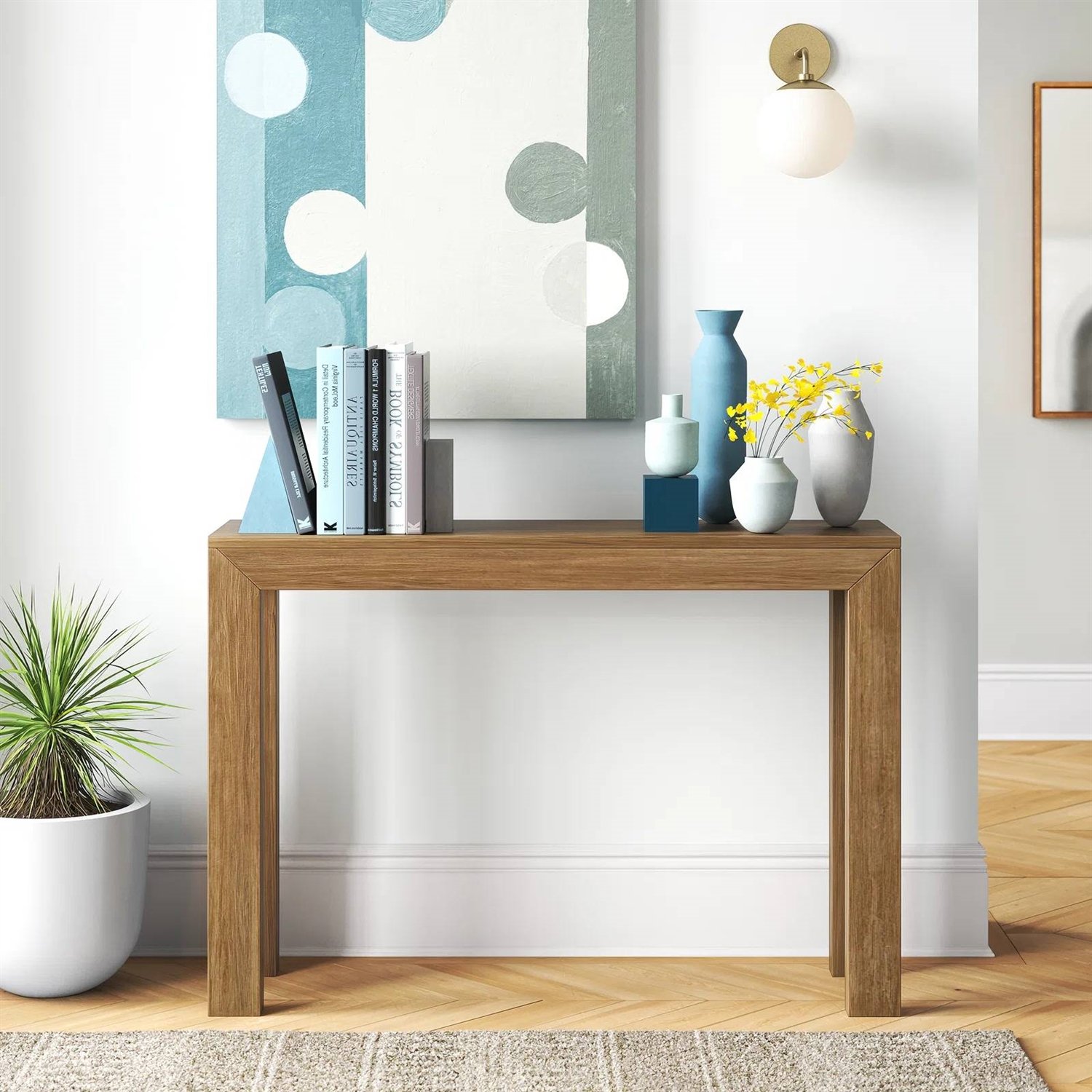
Every calm room needs an anchor — something with enough presence to hold the space together while everything else moves around it. A solid wood console table does this well in an entryway or behind a sofa. Its clean lines and warm pecan finish give you a surface to build on, literally: books, a vase, a small tray for keys. Furniture like this isn't meant to be noticed first. It's meant to make everything placed on top of it look intentional.
Open the Room Up
Once you have an anchor, light and reflection do the rest of the work. A round wood mirror does double duty — it bounces natural light around a room that feels closed in, and its soft, organic frame adds warmth without competing with anything else on the wall. Hung above a console table or on its own, it's one of the simplest ways to make a small space feel less small.
For texture on a nearby wall, a two-tone carved wood panel set brings in a botanical, hand-carved quality that reads as art rather than decor. It's a good pairing with a mirror because both rely on light and shadow rather than color to do their work.
Layer In Softness
A room with only hard surfaces — wood, glass, ceramic — can start to feel a little cold, however calm the palette. This is where textiles earn their place. A set of sage green corduroy pillow covers brings in gentle color and a ribbed texture that catches light differently depending on the hour. Paired with a quilted ivory throw draped loosely over a chair, they soften every hard edge in the room without adding visual noise.
Underfoot, a hand-woven ivory rug with a raised geometric pattern ties the palette together and adds a layer of texture you feel before you see. Rugs like this are often the last thing people think to update, but they're usually the piece doing the most quiet work in a room.
Let the Light Change With the Day
Natural light is wonderful until the sun goes down — and that's where a good lamp becomes essential rather than decorative. A tripod floor lamp with adjustable warm, neutral, and cool tones lets a room shift with the time of day. Warm in the evening for reading or winding down, neutral during the day for working, it's a small adjustment that changes how a whole room feels.
Its wooden tripod legs also tie back to the console table and mirror frame — a small detail, but one that makes a room feel considered rather than assembled.
Finish With Something Sculptural
The last layer is the one with no job to do except be beautiful. A sculpted white ceramic vase, with its soft wavy texture, works well on a console table or shelf, whether it's holding a single dried branch or standing entirely on its own. Pieces like this are what make a room feel finished rather than furnished — a small sign that someone lived here on purpose.
Building the Layers Yourself
None of this has to happen at once. Start with the piece your room is missing most — often the anchor furniture or the light — and build outward from there. A calm home isn't about matching everything perfectly. It's about choosing pieces that share a quiet sensibility and letting them sit together.
A Quiet Thought
A calm home is built slowly - one thoughtful layer at a time.